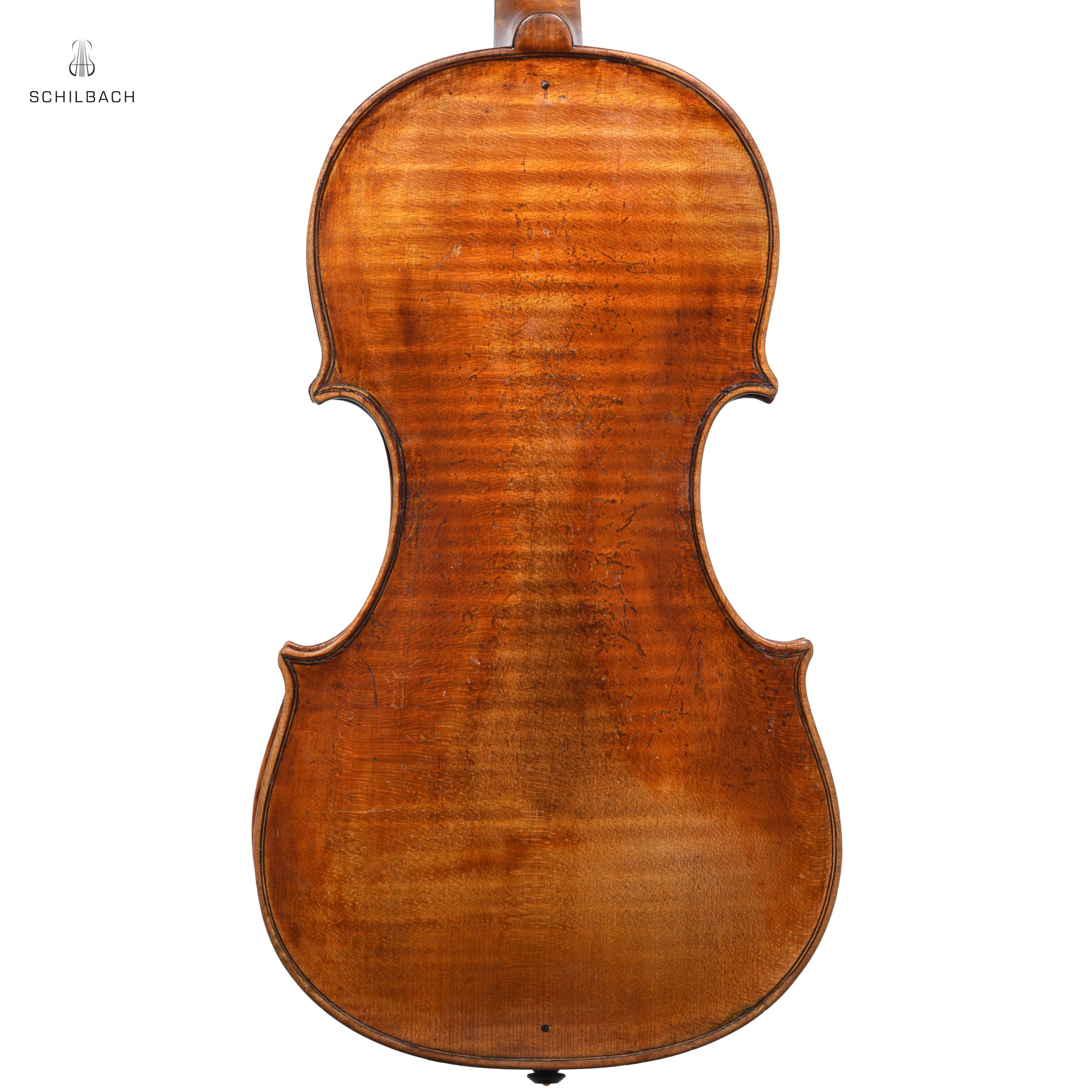
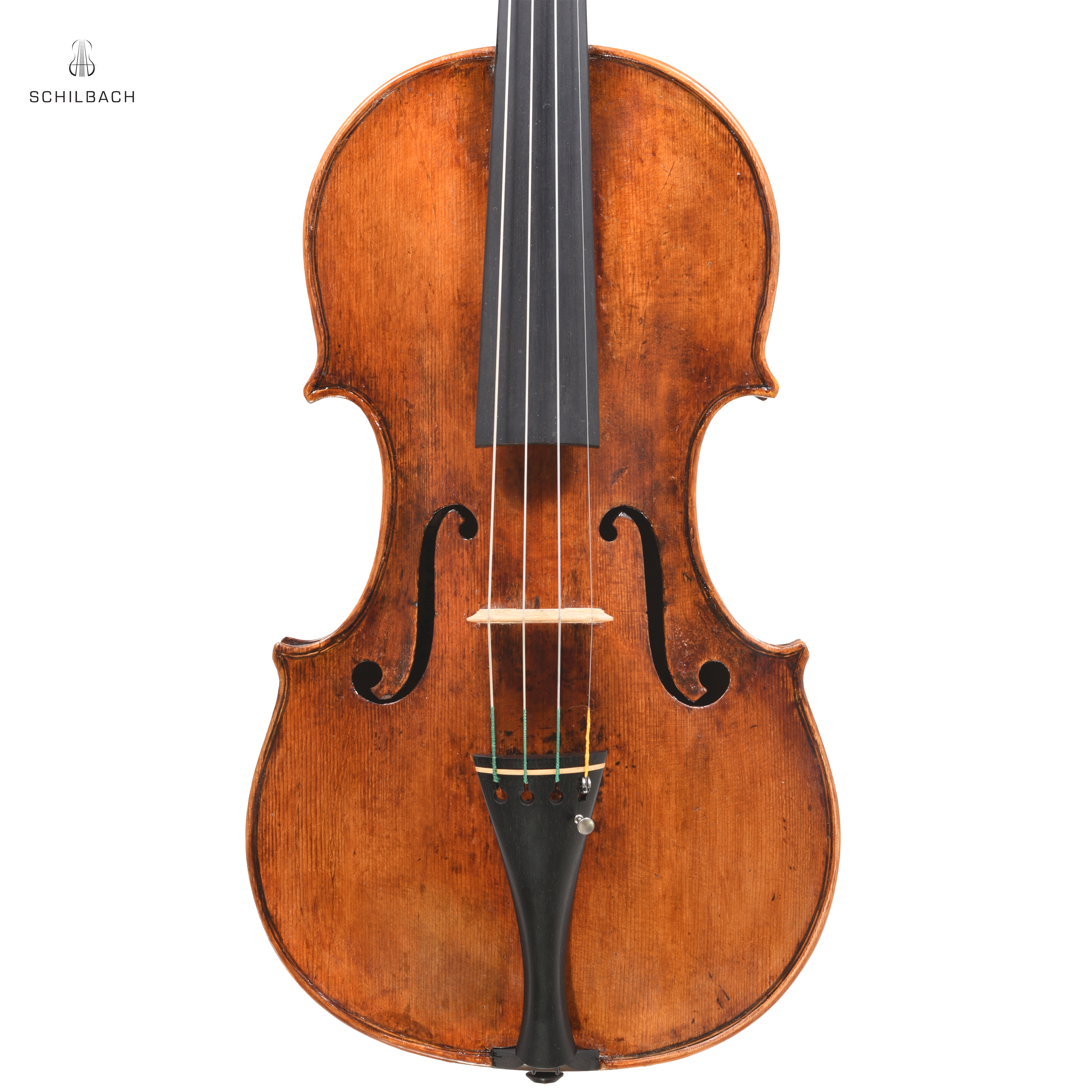
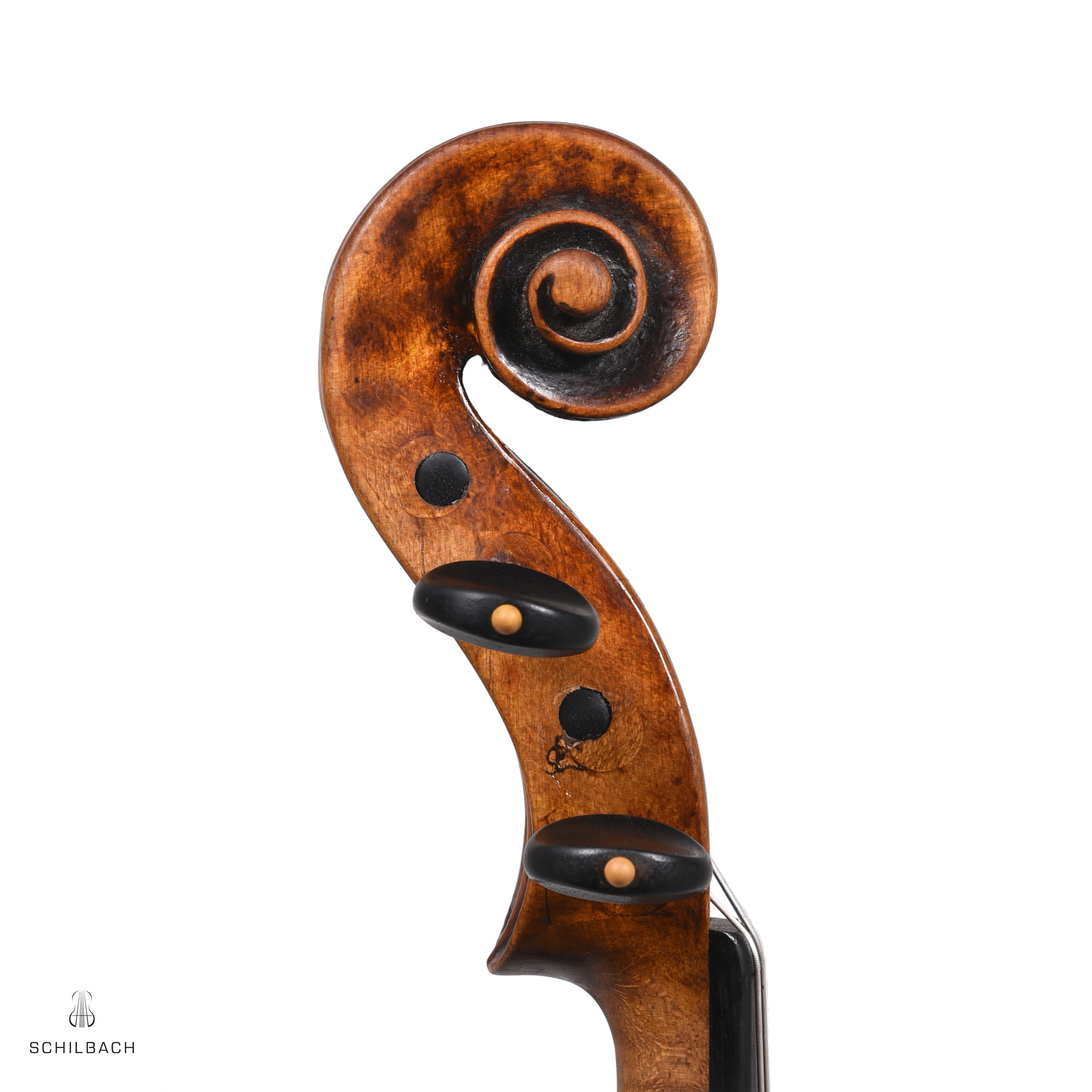
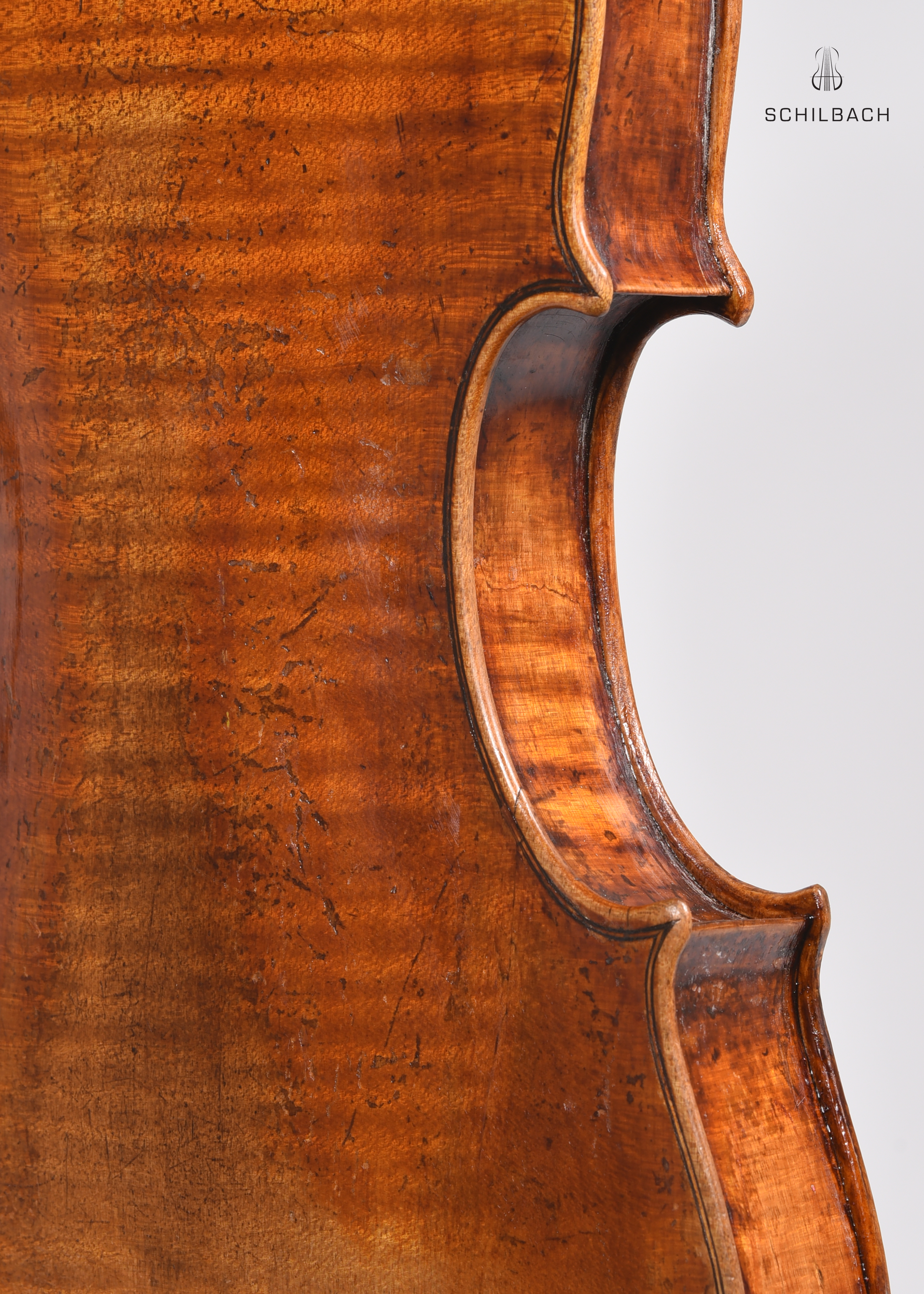
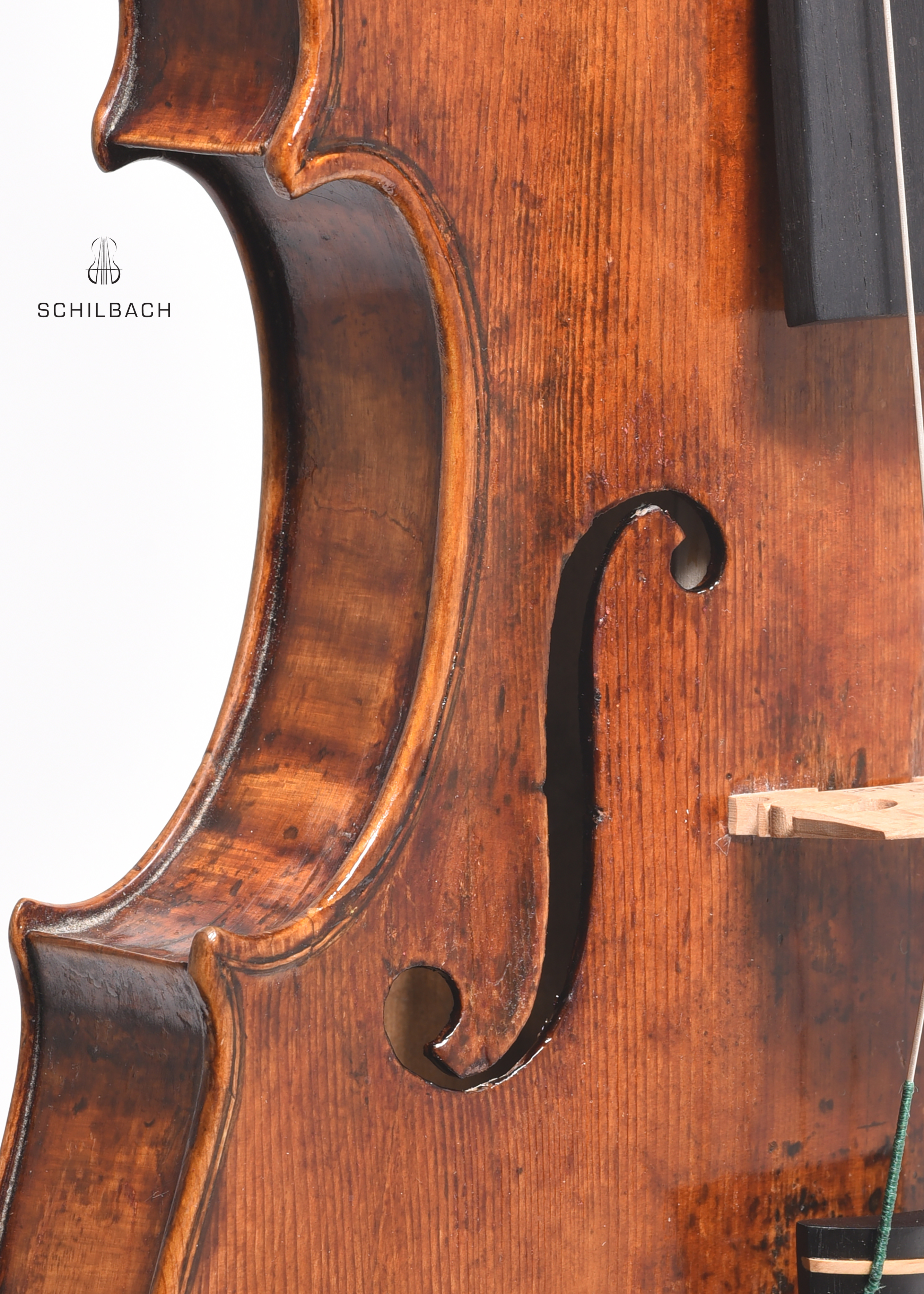
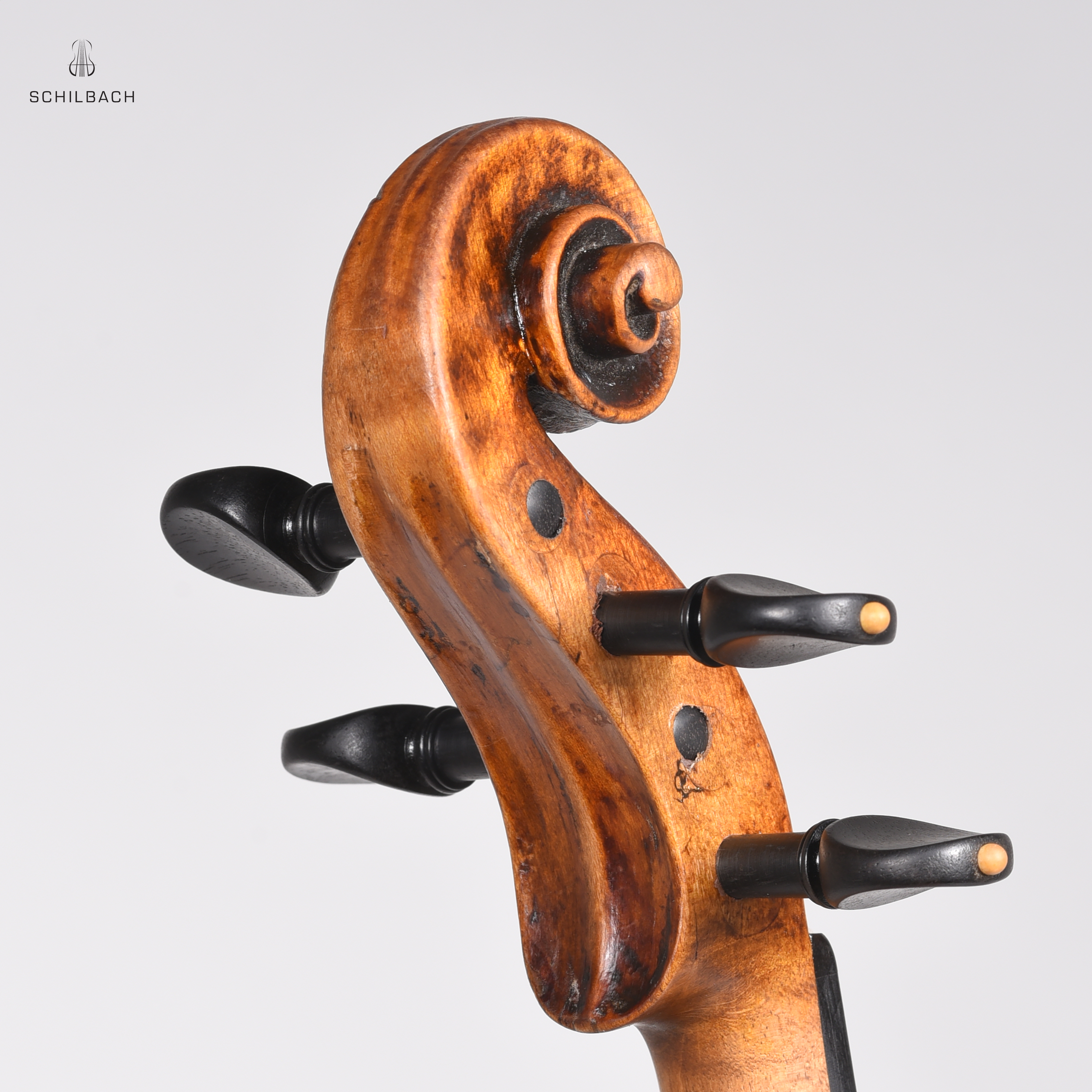
Jacques Boquay, violin, Paris, around 1720.
Jacques Boquay (c. 1680–1730). Along with Claude Pierray (1700-1740), this author marked the beginning of the "Vieux Paris" school. According to Sylvette Millot's work, he lived in modest circumstances: he rented his studio with a bedroom on the first floor, and had three suits in his wardrobe, one for weekdays, one for Sundays, and one for Holidays. This contrasts with the situation of later authors Jean Baptiste Salomon (1713-1767) and Louis Guersan (1700-1770), who owned several properties. Despite his modest circumstances as a craftsman, Boquay's work is very fine and delicate, based on models from the Amati family. His beautiful oil varnish is a characteristic that distinguishes him from later makers of the "Vieux Paris" school. The varnish is exceptionally well preserved on the back of this violin, built around 1720. The sound is refined, rich in harmonics and powerful. This instrument has been completely restored by the Atelier Schilbach. Bibliography : Sylvette Millot, Documents Inédits sur les Luthiers Parisiens du XVIIIe siècle, Paris, 1970.
https://www.schilbach.net/en/fine-instruments/jacques-boquay
https://www.schilbach.net/logo.png
Jacques Boquay, violin, Paris, around 1720.
Jacques Boquay (c. 1680–1730). Along with Claude Pierray (1700-1740), this author marked the beginning of the "Vieux Paris" school. According to Sylvette Millot's work, he lived in modest circumstances: he rented his studio with a bedroom on the first floor, and had three suits in his wardrobe, one for weekdays, one for Sundays, and one for Holidays. This contrasts with the situation of later authors Jean Baptiste Salomon (1713-1767) and Louis Guersan (1700-1770), who owned several properties. Despite his modest circumstances as a craftsman, Boquay's work is very fine and delicate, based on models from the Amati family. His beautiful oil varnish is a characteristic that distinguishes him from later makers of the "Vieux Paris" school. The varnish is exceptionally well preserved on the back of this violin, built around 1720. The sound is refined, rich in harmonics and powerful. This instrument has been completely restored by the Atelier Schilbach. Bibliography : Sylvette Millot, Documents Inédits sur les Luthiers Parisiens du XVIIIe siècle, Paris, 1970.